
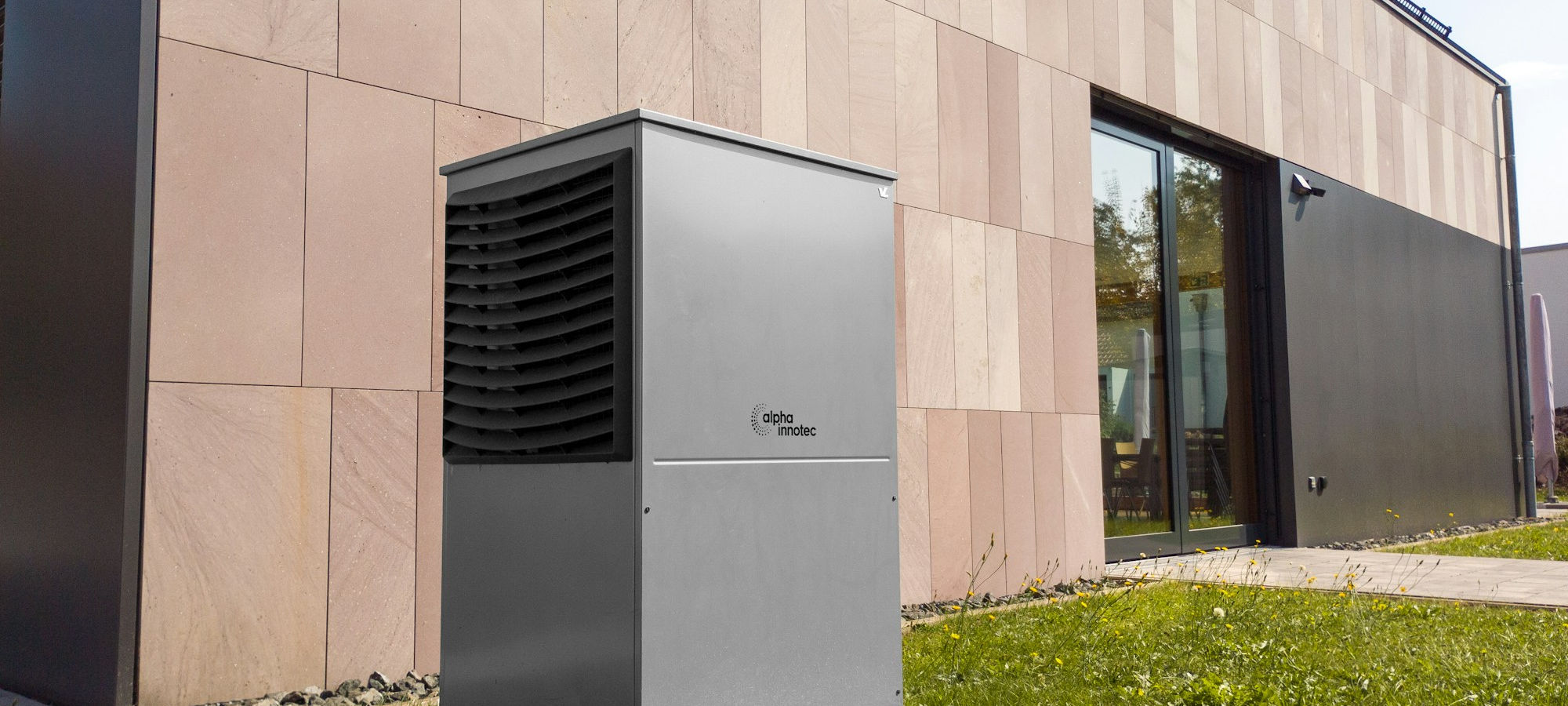
A heat pump is a system that moves heat from outdoor air, ground, or water into a building using an electrically driven compressor, without burning fuel. We explained efficiency, cost, and maintenance in our article on heating with a heat pump. In this article we cover the types of heat pumps, the differences between them, and the main brands on the market.
What are the types of heat pumps?
| Type | Heat source → heat delivered to | Note |
|---|---|---|
| Air-to-air | Outdoor air → indoor air | Air conditioners that heat, and VRF; the easiest type to install |
| Air-to-water (monobloc) | Outdoor air → system water | The refrigerant circuit is entirely in the outdoor unit; a water line enters the building |
| Air-to-water (split) | Outdoor air → system water | A refrigerant line between the outdoor unit and the indoor hydraulic unit |
| Ground-to-water (geothermal) | Ground → system water | Horizontal collector or vertical borehole; stable efficiency, high initial investment |
| Water-to-water | Well, lake, or process water → system water | Requires a suitable water source and a permit |
| Hybrid | Air + boiler | The heat pump works together with a combi boiler or boiler |
| Domestic hot water heat pump | Air → storage tank water | Produces hot water only |
Monobloc or split?
In a monobloc air-to-water heat pump, the entire refrigerant circuit is in the outdoor unit and only water pipes enter the building; installation is simpler, but the outdoor water lines must be protected against freezing with glycol or a freeze protection valve. In the split type, there is a refrigerant line between the outdoor unit and the indoor hydraulic unit; since there is no water outdoors, the freezing risk is lower, but installation involves refrigerant work and requires competent personnel.
Is a ground source heat pump more efficient?
Because ground temperature is more stable than air temperature throughout the year, ground source heat pumps provide higher and more stable efficiency, especially in cold regions. On the other hand, because they require drilling or a large collector area, the initial investment is significantly higher. The decision should be based on a feasibility study that takes into account the building's heat demand and the site conditions.

Which refrigerants are used in heat pumps?
New-generation air-to-water heat pumps increasingly use R32 and the natural refrigerant R290 (propane). Some R290 models can produce water at around 70 °C, so they can also be used in older buildings with radiators. Because R290 is flammable, placement and service rules must be followed carefully.
Which brands make heat pumps?
| Brand | Product line (example) | Note |
|---|---|---|
| Daikin | Altherma | Monobloc, split, hybrid and high-temperature models |
| Mitsubishi Electric | Ecodan | |
| Panasonic | Aquarea | |
| LG | Therma V | |
| Samsung | EHS | |
| Toshiba | Estia | |
| Vaillant | aroTHERM | In Türkiye, Demirdöküm is also part of the Vaillant group |
| Viessmann | Vitocal | Part of Carrier since 2024 |
| Bosch and Buderus | Compress, Logatherm | Brands of the same group |
| Stiebel Eltron | WPL | |
| Wolf | CHA | |
| Ariston | Nimbus | |
| Local and others: Baymak, Demirdöküm, Alarko Carrier, Üntes, İmbat | Different solutions for residential and commercial scales |
Heat pump chillers are also used in commercial and large buildings; brands such as Aermec, Clivet, Rhoss and Galletti stand out in this area.
Let's choose the right heat pump for your building together
We evaluate heat loss, system water temperature and placement, then give you a written equipment and capacity recommendation.
What steps should you follow when choosing a heat pump?
- Heat loss calculation: The building's heat demand at the design outdoor temperature is calculated. For a preliminary estimate, you can use our U-value and heat loss calculator.
- System water temperature: Whether the system uses underfloor heating, radiators or fan coils determines the choice of unit and its efficiency.
- Capacity and staging: The unit should be neither too large nor too small; it must be able to run stably at low capacity.
- Seasonal efficiency: Compare using SCOP and the energy label, not a single COP value.
- Noise and placement: The distance of the outdoor unit from neighbors and bedrooms, and snow and drainage conditions are considered.
- Hot water: If domestic hot water will also be produced, the cylinder volume and legionella protection are planned.
- Service and parts: Ask about the brand's service and spare parts support in your area.
Brand names belong to their owners. YOİ Mühendislik is an authorized service and sales point for LG; for other brands it provides maintenance, fault, and repair services as an independent technical service. Model and serial information may vary by manufacturer and market; for current information, refer to the manufacturer's Türkiye sources.
Frequently asked questions
Is a heat pump the same thing as an air conditioner?
Air conditioners that heat are air-to-air heat pumps. However, when people say 'heat pump', they usually mean air-to-water units that heat the water in an underfloor heating, radiator, or fan coil system.
Does a monobloc heat pump freeze in winter?
Not with correct installation. The outdoor water lines must be protected with glycol, a freeze protection valve, or the unit's freeze protection function.
Is a ground source heat pump suitable for every building?
It requires land suitable for drilling or a collector, a ground survey, and the necessary permits. Under suitable conditions it provides high and stable efficiency, but the initial investment is high.
Which heat pump brand is better?
There is no single right answer. The right capacity, low system water temperature, quality installation, and service support in your area matter more than the brand.