
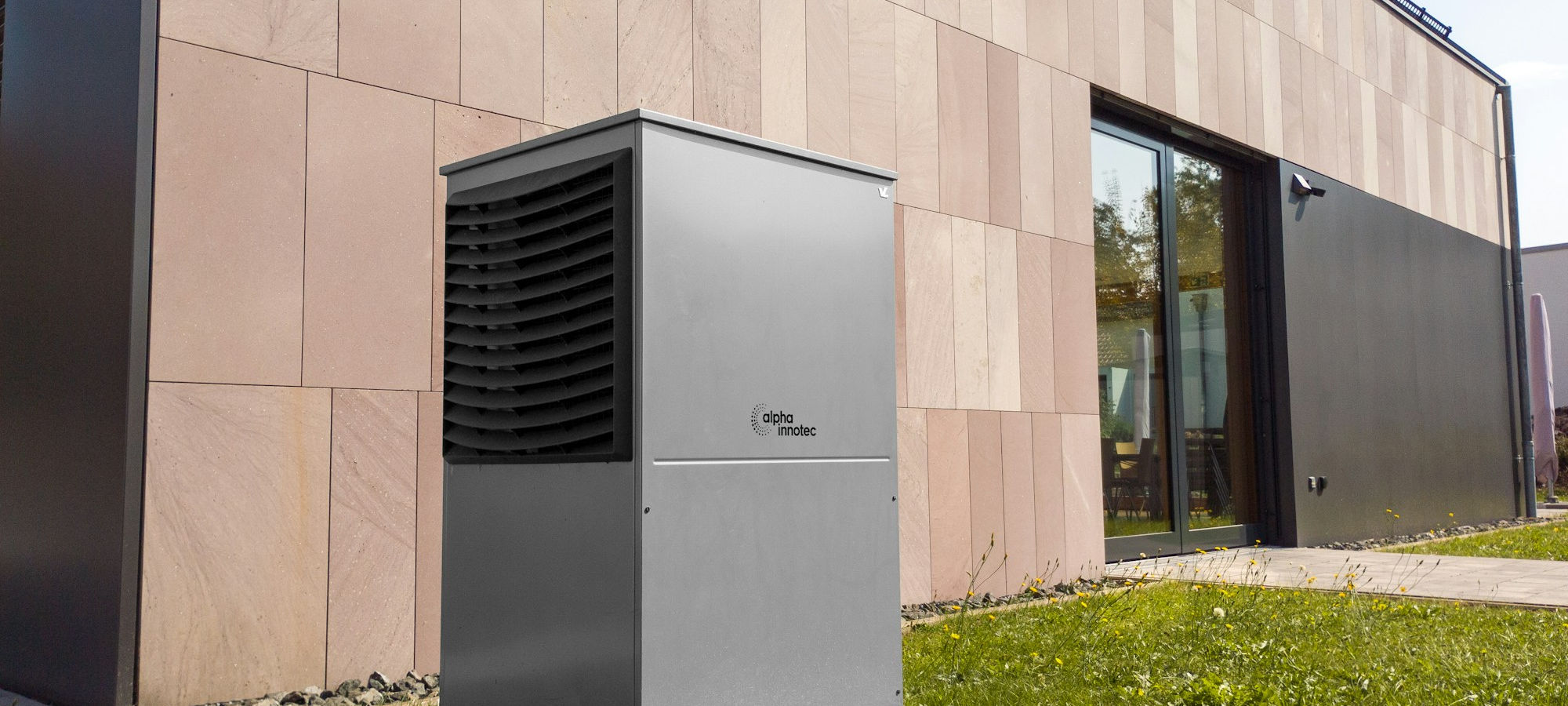
In recent years heat pumps have been chosen more and more often in newly built detached houses, villas and commercial buildings. Most of the questions we get fall under three headings: is it really efficient, is it expensive to run, and does it need maintenance? In this article we answer all three based on what we see in the field.
How does a heat pump work?
A heat pump is a device that, using a refrigeration cycle that works in the opposite direction to an air conditioner, takes low-temperature heat from the outside environment and delivers it to the building's heating system at a higher temperature. It does not produce heat by burning; it moves it, so it delivers more heat energy than the electricity it consumes.
The most common type is the air-to-water heat pump, which takes heat from the outdoor air and heats the water in an underfloor heating, radiator or fan coil system. The same unit can provide cooling in summer and domestic hot water all year round. Types that draw heat from the ground and water offer more stable efficiency, but their initial investment is higher.
What do COP and SCOP values tell you?
COP (coefficient of performance) is the ratio of the heat a heat pump produces at a given moment to the electricity it consumes; SCOP is the average of this ratio over the entire heating season. A unit with a COP of 4 produces 4 kWh of heat from 1 kWh of electricity.
In manufacturer catalogs, COP values are given under specific test conditions; for example, outdoor air at 7 °C and system water at 35 °C. In real use, COP falls as the outdoor air gets colder and the required water temperature rises. That is why, when comparing units, it is more accurate to look at the SCOP value and at data suited to your climate zone rather than a single COP.
| Condition | Typical COP range |
|---|---|
| Mild outdoor air, underfloor heating (low water temperature) | 4–5 |
| Outdoor air around 0 °C, underfloor heating | 3–4 |
| Cold outdoor air, radiators (high water temperature) | 2–3 |
The values in the table are only meant to give a general idea; the actual value varies with the unit model and the manufacturer's data.
What determines running cost?
A heat pump's running cost depends on the building's heat demand, the unit's seasonal efficiency and the electricity unit price. When comparing with natural gas or another fuel, the ratio between electricity and fuel unit prices needs to be evaluated together with the unit's SCOP. We covered this comparison in detail in our article on whether heating with an air conditioner is cheaper than natural gas.
01System water temperature
The design decision that most affects heat pump efficiency is the water temperature at which the system will operate. Underfloor heating can run on 30–35 °C water, while old-type radiators often need 50–60 °C. Every degree drop in water temperature improves efficiency; that is why a heat pump offers the most advantage in low-temperature systems.
02Building insulation
A poorly insulated building needs a higher water temperature and a larger unit. Before investing in a heat pump, reducing roof, exterior wall and window losses lowers both the size of the unit and its running cost.

03Choosing the right capacity
An oversized unit cycles on and off often, while an undersized one leans too heavily on the backup electric heater on cold days. Both reduce efficiency. The right capacity should be determined with a heat loss calculation and the design outdoor temperature of the region.
04Use and settings
A heat pump gives its best results by running at low power for a long time, not by delivering high heat in a short time like a combi boiler. So switching it off completely at night and reheating in the morning usually does not save money; a setback of a few degrees at night is better.
Is your heat pump running efficiently?
In a pre-season maintenance visit, we measure the refrigerant circuit, the water system and efficiency values and give you a written report.
Outdoor air compensation, meaning automatic adjustment of the water temperature according to the outdoor air, must be active. Setting the heating curve correctly for the building prevents the production of hotter water than necessary. The first winter after installation is the period when these settings should be fine-tuned based on real usage data.
What maintenance does a heat pump require?
Because a heat pump is a system with both a refrigerant circuit and a water system, it requires professional maintenance at least once a year, preferably before the heating season. In an unmaintained unit, efficiency loss usually builds up unnoticed and shows directly on the bill.
- Outdoor unit coil: It should be cleaned of leaves, dust and pollen; airflow must not be blocked.
- Defrost and drainage: Check that the water produced during defrosting is drained away without freezing.
- Water filter: The strainer in the system should be cleaned; a clogged filter reduces flow and the unit goes into alarm.
- System pressure and expansion tank: Water pressure and tank pre-charge should be checked against the manufacturer's values.
- Antifreeze: The glycol ratio should be measured on outdoor lines at risk of freezing.
- Refrigerant circuit: Pressures, superheat and compressor current should be measured.
- Electrics and sensors: Connections should be tightened and it should be verified that the temperature sensors read correctly.
- Hot water tank: If fitted, the anode condition and the legionella protection program should be checked.
As a home user, you can keep the area around the outdoor unit clear of snow, leaves and objects, and check the system pressure on the unit's display from time to time. Work on the refrigerant circuit, the electrical panel and the water system should be done by a qualified technician.
What are the common faults?
The most common heat pump faults are low water flow, icing and system pressure alarms; most of these are related to lack of maintenance. A clogged filter or a system that has not been bled reduces flow, and the unit stops with a high-pressure alarm.
Constant ice buildup on the outdoor unit indicates a problem with the defrost system or the sensors. If the unit brings in the backup heater more often than usual, that is also a sign of lost capacity and noticeably raises the bill. For older units, the refrigerant type also matters; for gas options, see our article on the R22, R410A and R32 transition.
Who is a heat pump the right choice for?
A heat pump is generally the right choice for well-insulated buildings with underfloor heating or a low-temperature system that need both heating and cooling. It is also one of the leading alternatives in areas without natural gas infrastructure.
In buildings with an old high-temperature radiator system and poor insulation, a heat loss calculation must be done before the investment decision, and if necessary the radiators should be enlarged or a hybrid solution considered. At YOİ Mühendislik, in our heat pump sales, installation and maintenance work, we first calculate the building's heat demand and then present the unit and system recommendation in writing. The cost is determined at the site survey.
Frequently asked questions
Does a heat pump work in cold winter weather?
Yes. Today's air-to-water heat pumps work at sub-zero temperatures too, but their efficiency drops as the outdoor air gets colder. In very cold regions, pay attention to the unit's low-temperature performance and the need for a backup heater.
Can a heat pump be used with radiators?
It can, but because radiators usually need a high water temperature, efficiency is lower than with underfloor heating. Enlarging the radiators or improving the building's insulation raises efficiency.
How often should a heat pump be serviced?
At least once a year, preferably before the heating season. For units used heavily for both heating and cooling, two services a year are recommended.
What is the difference between COP and SCOP?
COP shows the instantaneous efficiency under a specific test condition, while SCOP shows the average efficiency over the entire heating season. SCOP is a more realistic measure when comparing units.