
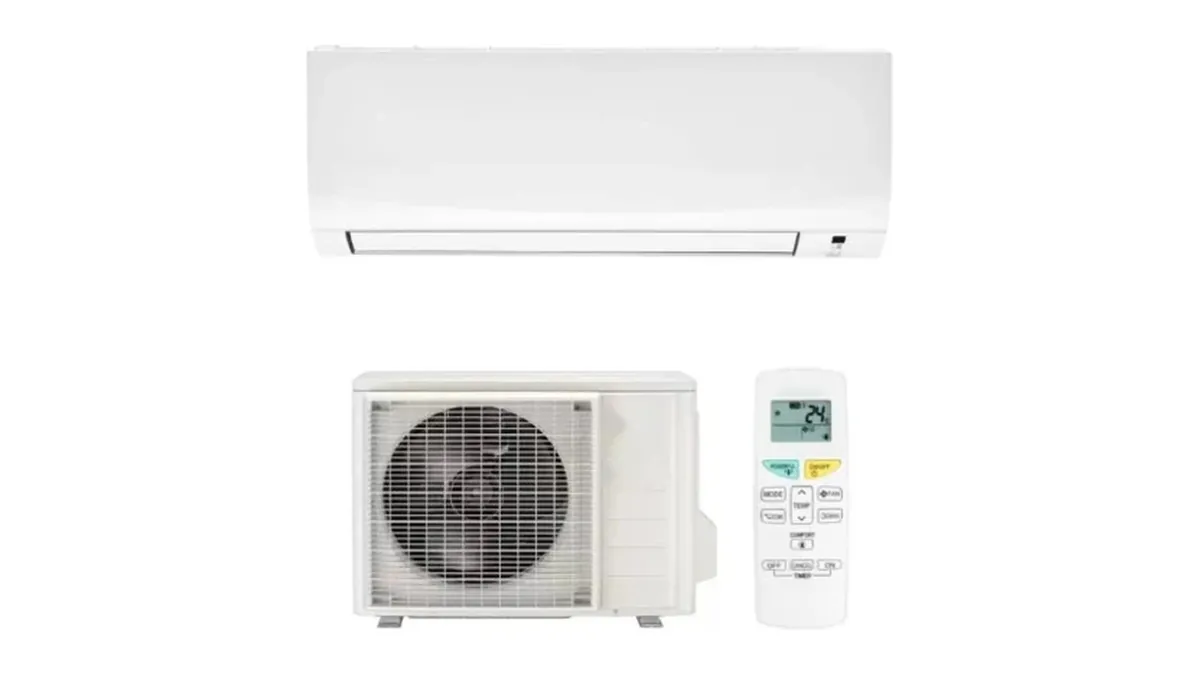
Every air conditioner that cools condenses moisture from the air. On a hot, humid summer day, a home split air conditioner can produce anywhere from a few hundred milliliters to more than a liter of water per hour. This water has to collect in a pan and flow outside through a hose. If water is dripping into the room, there is a problem somewhere along this path.
The good news is that most drainage problems are not as expensive as a compressor or board fault. But if not dealt with early, they can cause damp stains on the wall, swelling of the parquet and mold. And if the water reaches the electronic board, a simple drainage problem can turn into a board fault. Below, we explain the most common causes, the checks you can safely do at home and the technician's work, one by one.
Why does an air conditioner produce water?
Air conditioner water is the water formed when moist air in the room comes into contact with the cold coil and condenses. It is the same phenomenon as the droplets that form on the outside of a cold glass. The water runs off the coil into the drain pan below and is carried outside or to a drain by the hose connected to the pan.
Water dripping from the outdoor unit is usually normal. In cooling mode it comes from the outdoor unit's pipes, and in heating mode from ice melting during defrost. The problem is water coming from the indoor unit into the room.
5 reasons water leaks from the indoor unit
01Clogged drain hose or pan
The most common cause is dust, mold and a biological layer (slime) building up in the pan and hose and blocking the water's path. When the pan fills, water starts dripping from under the unit or from the edge of the front panel. An insect, cobweb or bird nest at the outer end of the hose has the same effect.
02Wrong hose slope
Drain water flows by gravity alone, without a pump. The hose must therefore run with a continuous downward slope from the indoor unit outlet to the outer end. If the hose bends upward somewhere, sags into a belly, or its end sits submerged in a bucket of water, the water flows back.
This is the first place to look when the leak starts after a new installation or after furniture has been moved in.
03Coil is icing up
A clogged filter, low fan speed or low refrigerant makes the coil freeze. When the air conditioner switches off or goes into defrost, this ice melts all at once and produces more water than the pan can hold. The water then overflows the pan. In this case the drain is actually fine; the real problem is the cause of the icing, and it should be handled together with the checks in our article on an air conditioner that does not cool.
04Indoor unit is not level
The indoor unit should be mounted either level or with a very slight tilt toward the side where the drain outlet is. In a unit hung tilted the other way, the water collects at the opposite end of the pan instead of the drain outlet, and overflows from there. A loosened wall mounting plate can also upset this tilt over time.
05Faulty drain pump
In cassette, ducted and some wall-mounted air conditioners, the water is pushed out by a small drain pump because the slope is insufficient. When the pump fails or its float gets stuck, the pan fills quickly. On these units the pump float usually also triggers an overflow alarm and stops the air conditioner. For information on ceiling-type units, see our cassette and ducted air conditioner page.

From symptom to cause: what should you think of in each case?
When and where the water appears largely reveals the cause. The table below summarizes the cases we meet most often in the field; an on-site check is still needed for a definite diagnosis.
| What do you see? | Likely cause |
|---|---|
| The air conditioner drips from the front panel after running for a few hours | The pan or hose is partly clogged and water builds up slowly |
| A lot of water comes right after the air conditioner shuts off | The coil is icing up and the melting ice overflows the pan |
| Water always drips from one end of the unit | The indoor unit was mounted tilted the wrong way |
| Water has been leaking since the new installation | Hose slope or connection is wrong |
| The wall under the unit is wet along the pipes | The copper pipe insulation is torn and the pipe is sweating |
| The cassette air conditioner stops and gives an overflow alarm | Drain pump or float fault |
If the water leak comes with a sour or musty smell, a biological layer has formed in the pan. In that case, clearing the hose is not enough; the pan and coil also need a treated cleaning. We cover the odor problem separately in our air conditioner smells bad article.
Is your air conditioner dripping water?
Our team clears the drain pan and hose, corrects slope and installation errors, and if needed finds the cause of the icing by measurement.
Checks you can safely do at home
Cleaning the filter, checking the outer end of the hose and visually inspecting the slope are jobs you can do yourself. Before starting, switch the air conditioner off and, if possible, cut its power at the fuse.
- Clean the filters: A clogged filter leads to icing, and icing leads to overflow. Wash the filter with lukewarm water and dry it in the shade.
- Check the outer end of the hose: Check whether the end is submerged, crushed or blocked by something. If the end has dried deposits, clean them by hand.
- Follow the hose route: If the visible section bends upward or sags, correct it.
- Watch the flow: Run the air conditioner in cooling mode for 15–20 minutes and see whether water comes out of the outer end.
Blowing strong air into the drain hose from outside or pushing a wire into it can dislodge the pan or puncture the hose. If the blockage does not clear on its own, call a technician.
What does the technician do?
The technician first pins down where the water is coming from: pan overflow, a leak at the hose connection, or condensation on the pipe insulation. Then the drain pan and hose are cleared by vacuum or another suitable method, and the pan is cleaned with a treatment solution. If needed, the hose route is rearranged or the indoor unit is leveled.
If icing is found, a pressure measurement is taken and low refrigerant or a fan fault is investigated. On units with a pump, the pump and float are tested. If the insulation on the copper pipes is torn, the pipes can sweat and let water seep into the wall; in that case the insulation is renewed.
How do you prevent drain problems?
Most drain faults are prevented by regular maintenance. If the pan and hose are cleaned at least once a year during maintenance, no biological layer builds up, and odor and clogging disappear together. We explain maintenance frequency in our air conditioner maintenance guide.
The YOİ Mühendislik team clears drains, cleans pans and corrects installation faults on all brands. Switching off a leaking air conditioner and calling us, instead of running it for a long time, prevents damage to walls and floors.
Frequently asked questions
Is water dripping from the air conditioner's indoor unit normal?
No, water dripping from the indoor unit into the room is not normal. It is usually caused by a clogged drain, a wrong hose slope or an icing coil.
Is water coming from the air conditioner's outdoor unit a fault?
Most of the time, it is not. In cooling, condensation water runs from the pipes, and in heating, melted ice water from defrost runs from the outdoor unit.
Can I unclog the air conditioner's drain hose myself?
You can clear a visible blockage at the outer end of the hose and check the slope by eye. Opening up the pan and the inside of the hose must be done by a technician.
Can I keep using an air conditioner that is leaking water?
It is not recommended. Water can reach the electronic board and cause moisture damage to the wall and floor; switch the air conditioner off and have the cause identified.